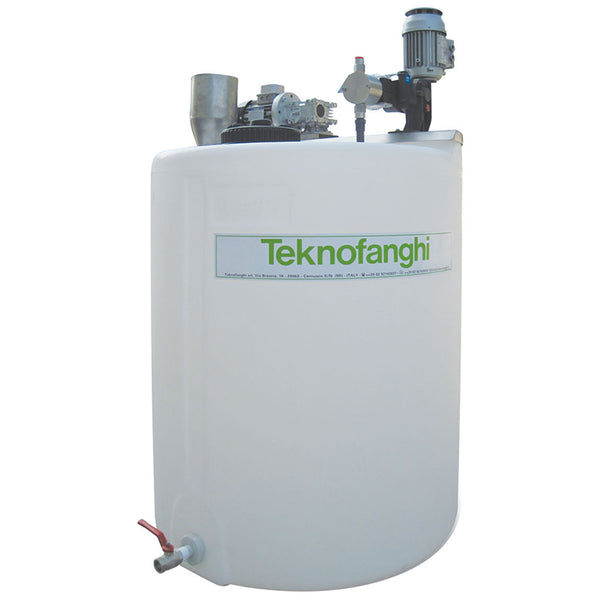
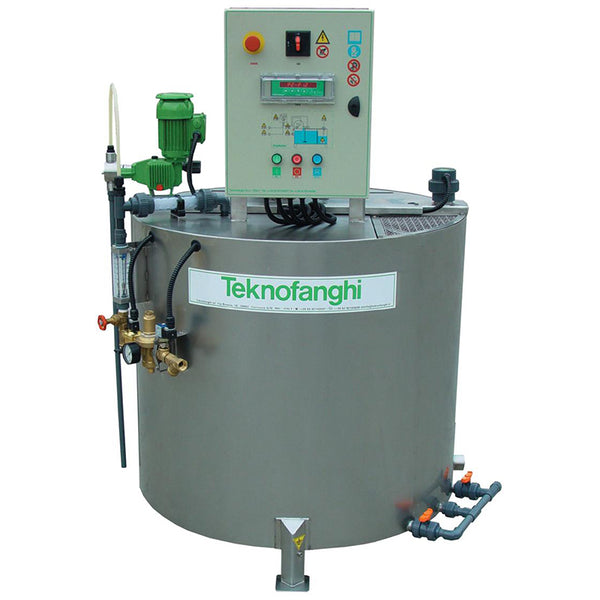
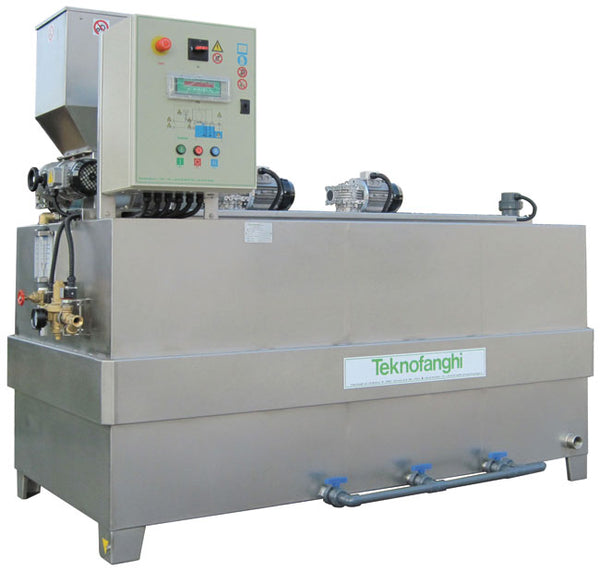
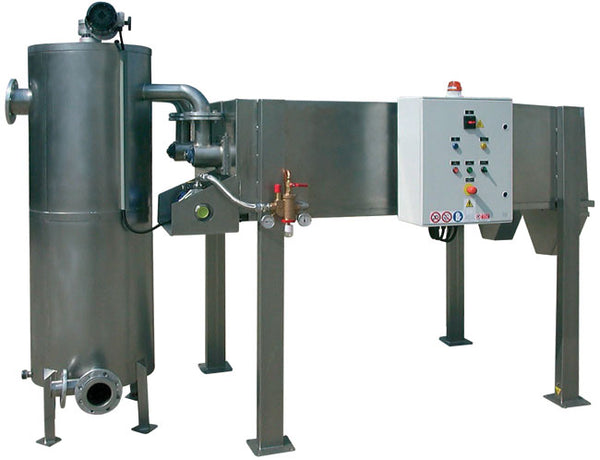
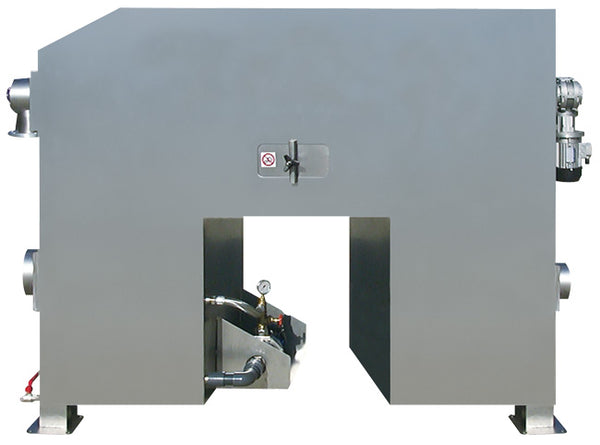
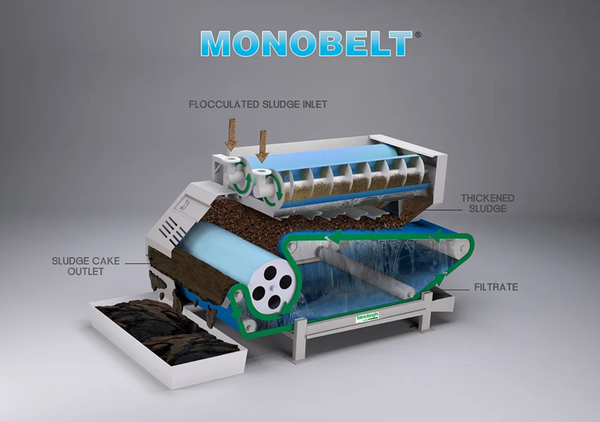
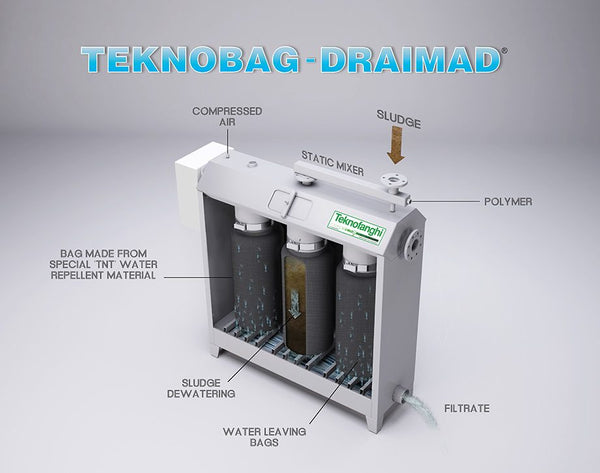
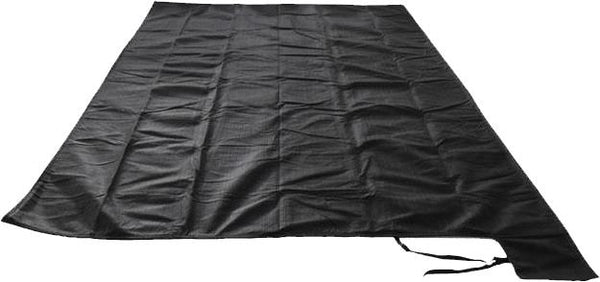
This page covers two jobs. At a water or wastewater treatment plant, sludge is thickened and dewatered to cut the volume to haul: Teknofanghi's SCRUDRAIN drum thickener takes sludge from 0.5–3% to 5–15% dry solids, the MONOBELT belt filter press makes cake at 18 to 30% dry solids, and TEKNOBAG DRAIMAD dewaters sludge into bags, at 15 to 30% dry solids within hours. POLYDILUTION units prepare and dose the polymer these machines use, and SCRUFILTER microfilters water down to 20 µm. On a construction site, pumped water runs through a Sampson silt bag (3 x 4 ft, 50 micron nonwoven polypropylene) that holds back silt and sediment.
For the full dewatering line, see Sludge Dewatering.
Sludge and sediment FAQ
Sludge or sediment: which equipment?
Sludge is the solids a treatment plant removes from water, handled with thickeners, presses and bags. Sediment on a construction site is the silt and soil carried in pumped water, held back with a silt bag. For contaminated site water, see Remediation — Water Treatment.
Which dewatering machine fits my plant?
Choose by sludge volume and the dryness you need. TEKNOBAG DRAIMAD treats 2 to 20 m³ of sludge a day at 1% dry solids and suits small plants; the MONOBELT runs continuously at 1 to 140 m³/h on belts from 600 to 2,000 mm, with its own pre-thickener. Send the sludge type, the daily volume and the dry solids with a quote request.
What is a silt bag for?
Dewatering pumped water from excavations and sumps: the pump discharges into the bag, which holds back silt and sediment and lets the water through. The Sampson bag is 3 x 4 ft nonwoven polypropylene rated 50 micron. Check local rules on where the filtered water may go. See also Silt Bags.