


 Rolls-Royce


 Bureau Veritas


 Renouveau La Fontaine
 Englobe
 National Defence
 Government of Québec
Overview
It enables the collection of groundwater samples from multiple points in a single drive/drilling location, at discrete zones. Profiler transects allow:
• high resolution sampling
• contaminant vs. depth profiling
• detailed plume delineation
The Drive-Point Profiler was originally developed at the University of Waterloo and is described in various papers. A rig pushes, vibrates, or hammers the Profiler and attached AW rod to the desired depth.
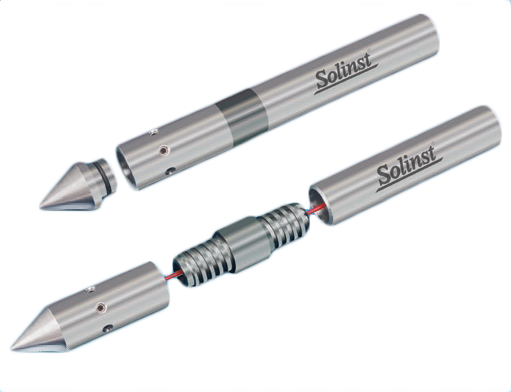
The Profiler is 1.75" (45 mm) in diameter, stainless steel, with a row of screened inlet holes set circumferentially. The inlet holes lead to a single stainless steel fitting, where 4 mm LDPE or PTFE sample line leads to a Peristaltic Pump at surface. (See Solinst Model 410 Data Sheet.)
Sealing Profiler Holes
Holes in most homogeneous sands will collapse as soon as the Profiler is withdrawn. In other geologic formations it is best to use a Grout Tip Profiler. The grout tip model has a single use tip that can be separated from the Profiler by injecting grout under pressure using a grout pump, after sampling is complete. This allows the hole to be sealed as the Profiler is being withdrawn, to ensure no void spaces.
Depth Discrete Sampling
Profiling can start at ground surface, or to save time, it can begin at the bottom of a pre-drilled hole.
To avoid downward drag and cross contamination, the Profiler system is flushed with deionized water using a Peristaltic Pump while it is being driven between sampling zones.
When the desired depth is reached, the pump flow is reversed. The resulting water flow to surface is monitored for clarity and conductivity. When all deionized water is removed from the system and purge parameters have stabilized, the sample is taken.
After sampling, the water flow is reversed and once again deionized water is used to flush the Profiler tip, to keep it from clogging. Tests have proven virtually no ‘drag down’ if correct procedures are followed.
Depth Limitations
Most drill rigs with AW rod will have the capability to advance the Profiler. A tubing by-pass will be required to allow the sample line to exit the rods.
Drive-Point Profilers are not suitable for all sites. Depth limitations vary with soil conditions and the drive technology used. Using a peristaltic pump to flush and sample is effective if the water level in the borehole is within 26 ft. (8 m) of surface.
There is no minimum separation between sample depths, which makes the Model 660 ideal for high resolution profiling.
Documents
Questions, answered
How fast will I get a price?
Send the quote request and a specialist replies within 4 business hours, Monday to Friday, 8:00 to 4:30 ET.
Can we pay on account or by purchase order?
Yes. With established credit, terms are Net 30 days, and you can send your purchase order with the quote request. We also accept Visa, Mastercard and American Express.
How is shipping charged?
On quotes and account orders, freight is F.O.B. Montréal: the carrier charge is worked out at shipment from the packed weight and dimensions, and added to your invoice. In-stock items can also be picked up the same day in Montréal (8605 rue du Champ-d'Eau).
Can I return it?
Yes, within 30 days of purchase, with a return authorization number from customer service first. A 25% restocking fee applies, unless it is a defect covered by the warranty. Special orders, hazardous materials, flammable liquids and gases can't be returned. Return policy
Related equipment we stock
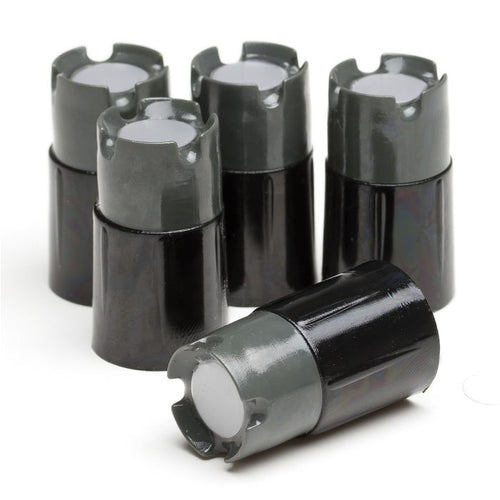
Replacement DO Membranes for Galvanic DO Probes (5-Pack)
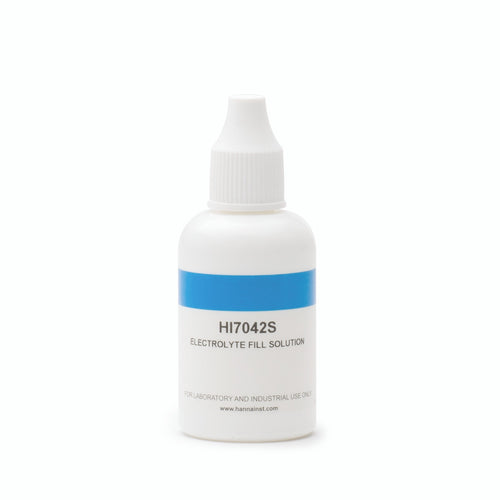
Dissolved Oxygen Electrolyte Solution for Galvanic DO Probes (30 mL)

Icon TPP Plastic Liquid Temperature Probe with 4-20mA Output
Measuring Range: 0 - 212 F | Accuracy: ±0.5 % FS | Output: 4-20mA
from$599.95 CAD

Icon C700 NEMA 4X Conductivity Controller with Single-Channel Data Trending
Measuring Range: 0 - 500 mS/cm | Output: 4-20mA + RS485 + relays | Power: 9 - 36 VDC
from$1,449.85 CAD