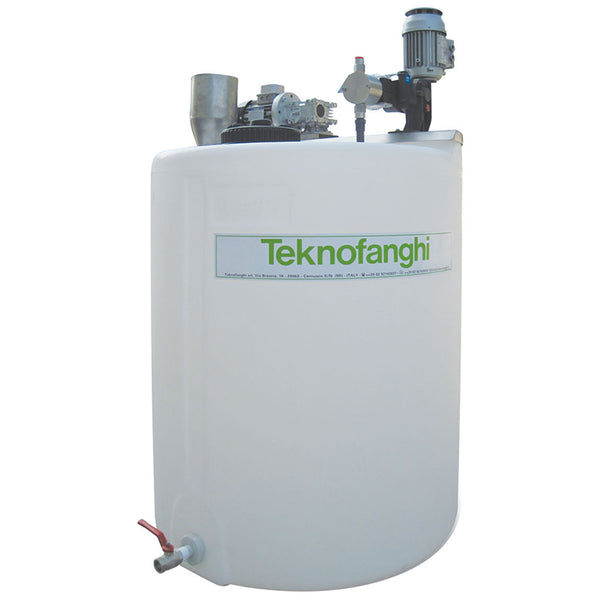
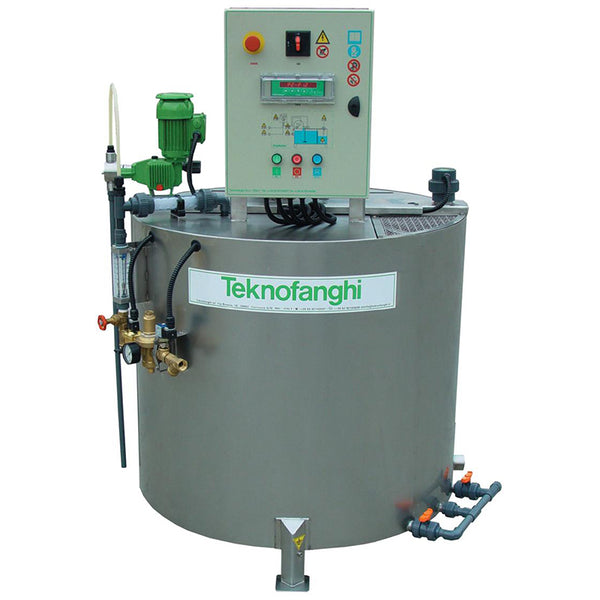
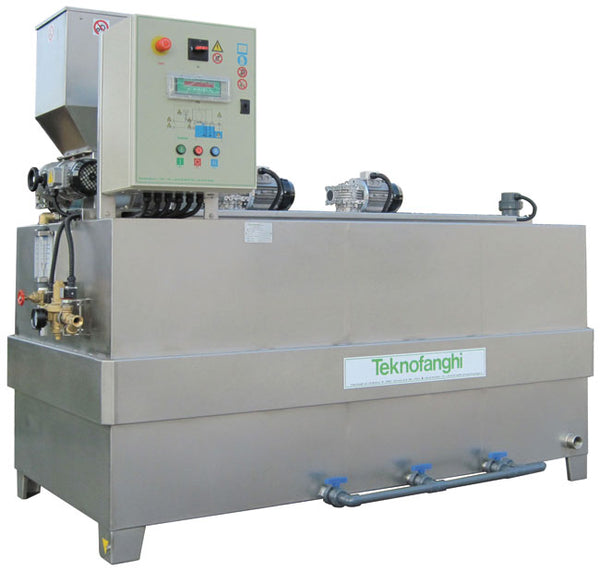
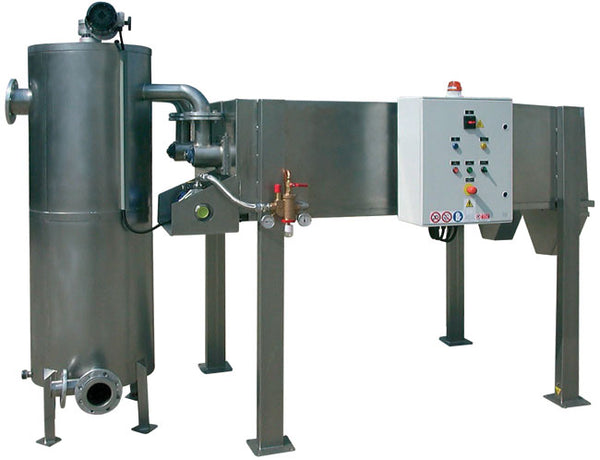
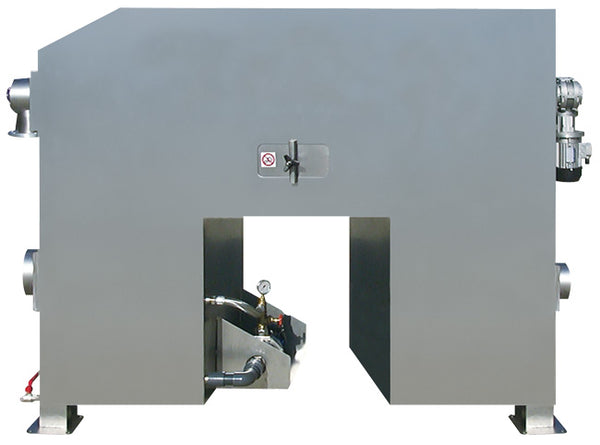
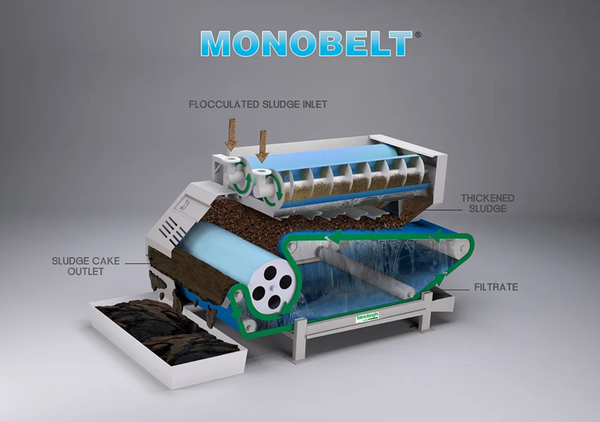
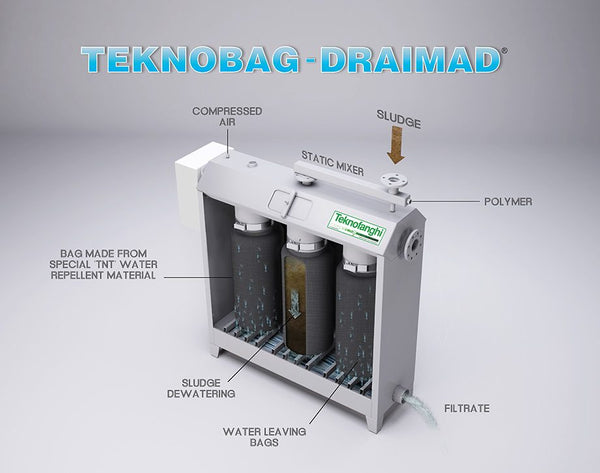
Dewatering turns liquid sludge into a solid that costs less to haul and dispose of, usually in two steps: thicken, then dewater. ERE supplies Teknofanghi's line for water and wastewater plants. The SCRUDRAIN rotating-drum thickener uses an Archimedean screw to raise sludge from 0.5–3% to 5–15% dry solids. The MONOBELT belt filter press pairs a pre-thickener with a press for cake at 18 to 30% dry solids. TEKNOBAG DRAIMAD fills filter sacks on a stainless steel frame (2 to 12 bags) and reaches 15 to 30% dry solids in hours, and 50 to 95% after about two months of storage. POLYDILUTION units prepare and dose the polymer; SCRUFILTER microfilters water down to 20 µm.
Send the sludge type, daily volume and target dryness with a quote request.
Sludge dewatering FAQ
Belt press or bag dewatering?
Volume decides. TEKNOBAG DRAIMAD treats 2 to 20 m³ of sludge a day at 1% dry solids and needs room to store the bags while they drain; the MONOBELT runs continuously at 1 to 140 m³/h. Both use polymer.
What dry solids can I expect?
The product records give: SCRUDRAIN thickening to 5–15%, MONOBELT cake at 18–30%, and DRAIMAD 15–30% after a few hours and 50–95% after about two months in storage. Results depend on the sludge.
Which polymer unit do I need?
Match the polymer form and the flow. The manual TE-CMP (300, 500 or 1,000 L tank, metering pump adjustable from 10 to 100%) suits small plants with DRAIMAD; the automatic TE-CAP units handle emulsion polymer (up to 2,000 or 6,000 L/h of solution) or powder (750 to 6,000 L/h, with dilution, dispersion and ageing tanks).
What does SCRUFILTER do?
It removes fine suspended solids from water by gravity-fed, continuous microfiltration, with filter cloths from 20 to 100 µm, and needs no external wash water.