


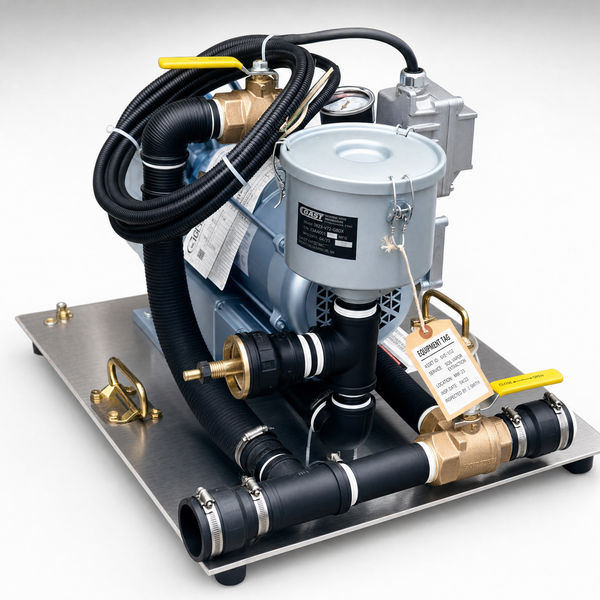
EvacuSol™ 2 HP — Soil Treatment System
Vacuum pump: 2 HP | Mounting: skid-mounted, portable | Scale: small-scale / pilot SVE | Depth: shallow to moderate
Price on quote · 4 business hours
EvacuSol soil vapour extraction systems, built by ERE: six regenerative-blower models from 0.5 to 10 HP, 55 to 400 SCFM open flow and up to 98 in. w.c. vacuum, UL and CSA approved and explosion-proof (Class 1, Div. 1 and 2, Group D). Rent or buy.


Vacuum pump: 2 HP | Mounting: skid-mounted, portable | Scale: small-scale / pilot SVE | Depth: shallow to moderate
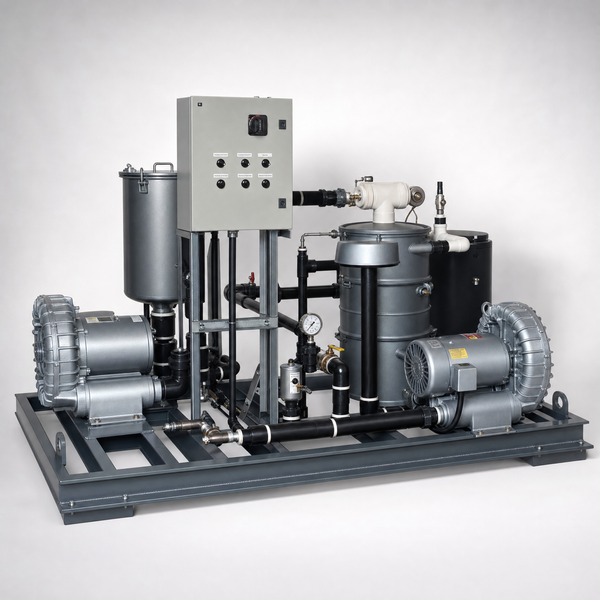
Vacuum pump: 10 HP | Mounting: skid-mounted (forklift/crane) | Scale: full-scale / production SVE | Condition: new
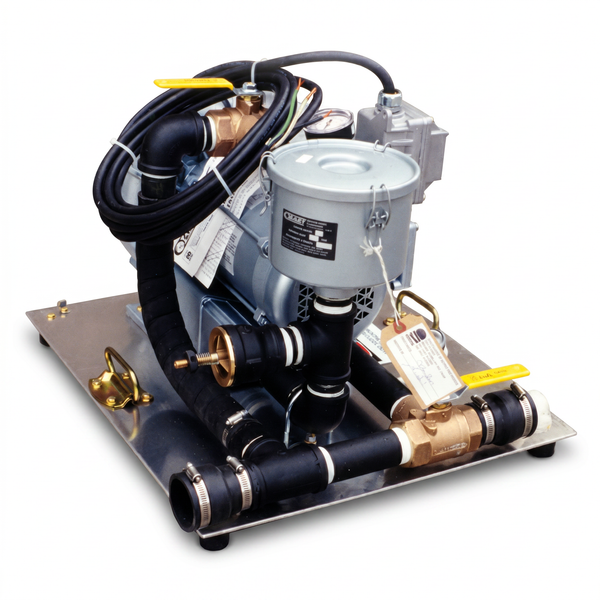
Open Flow: 55–400 SCFM | Max Vacuum: 35–98 IWG | Power: 0.5–10 HP | Rating: Explosion Proof, Class 1 Div 1 & 2 Group D
Soil vapour extraction (SVE) applies vacuum to wells screened above the water table and draws volatile and semi-volatile organic compounds out of the soil without digging it up. ERE builds the EvacuSol line for this low-flow, high-vacuum work: six regenerative-blower models from 0.5 to 10 HP, 55 to 400 SCFM open flow and 35 to 98 in. w.c. maximum vacuum. Each unit has an air filter, an ambient air valve, vacuum gauges and overload protection, is UL and CSA approved, and is explosion-proof (Class 1, Div. 1 and 2, Group D). The extracted vapour goes to atmosphere or to a carbon unit.
Skid-mounted 2 HP and 10 HP units are listed under Remediation — Soil & Separation. Rent or buy across Canada and the USA.
When volatile contaminants sit in the soil above the water table: leaking underground storage tanks, solvent spills and gasoline vapour plumes are the usual cases. It is a poor fit for heavy oils, most metals, or contamination below the water table. See our SVE guide.
No, it extracts vapour only. Free product (LNAPL) or dissolved contamination calls for dual-phase extraction or pump-and-treat (Treatment Systems); dissolved VOCs below the water table can be air sparged, with SVE capturing the vapour.
On contaminant volatility, soil permeability, the radius of influence of each well and whether the vapour must be treated. Coarse sandy soil carries vacuum over a wide radius; clay needs more wells at higher vacuum. A pilot test at one well confirms the layout, and the blower and the carbon unit are sized as a pair.
From several months to several years, depending on volatility, permeability and the cleanup target; periodic soil gas monitoring tracks progress. Send the contaminant, the soil type and any pilot test data with a quote request.