


Browse Categories
Water & Liquid Monitoring
Browse Water & Liquid Monitoring
Related in Water & Liquid Monitoring
- Water Quality Meters
- Water Quality Instrumentation
- Water Level
- Bacteria Test Kits
- Test Kits
- Levelogger
Department
Dye Tracing
Bright Dyes fluorescent tracer dye tablets from Kingscote for leak detection, sewer and septic tracing and flow studies, plus Kolor Kut water finding and gasoline gauging pastes that change colour on contact to show water or fuel levels in tanks.


3 products
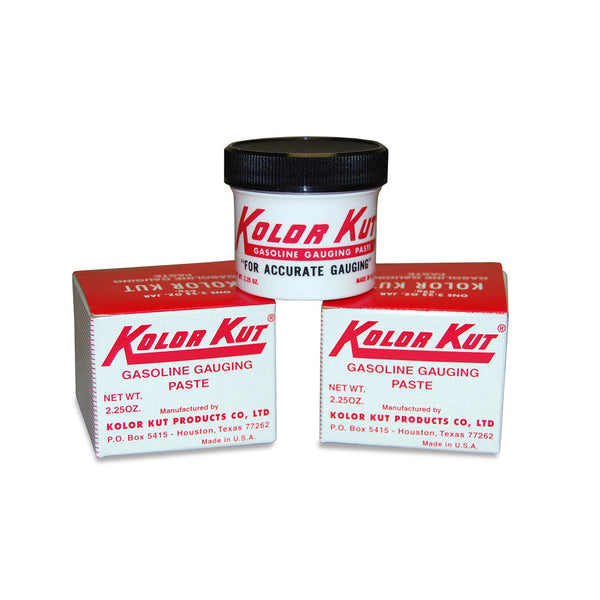
KK-GGP
Kolor Kut Gasoline Gauging Paste
2.25 oz plastic jar | Light pink; turns red on contact with hydrocarbons | Storage: 31–115°F | No expiration date | US Military approved
Price on quote · 4 business hours
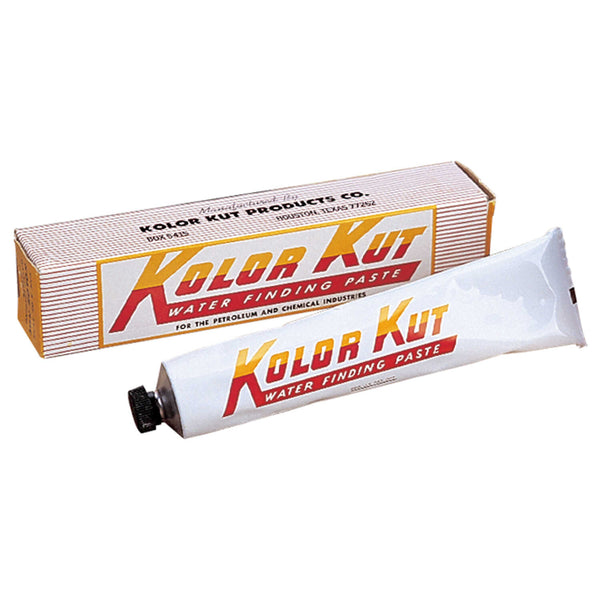
KK-WFP
Kolor Kut Water Finding Paste "The Gauger’s Friend"
3 oz (85 g) tube | Flash point 365°F (185°C) | Storage 31–115°F (0–46°C) | Specific gravity 1.1 | Yellow/brown semi-solid, turns brilliant red on water contact
Price on quote · 4 business hours
Tracer dye makes water you cannot see visible: dose a drain, a septic field or a process line and watch where the colour comes out. Bright Dyes fluorescent tablets from Kingscote come 200 to a bottle and can be seen in clear water at about 100 ppb of active ingredient, and at about 10 ppb under a hand-held UV light in ideal conditions. Pick the colour by contrast: red stands out against green algae, and fluorescent red, orange and yellow-green show more than non-fluorescent blue. For tanks, Kolor Kut pastes go on a gauging stick: Water Finding Paste turns from golden brown to red on contact with water, and Gasoline Gauging Paste turns red on contact with gasoline, diesel and other hydrocarbons.
Dye tracing FAQ
Which dye colour should I use?
The one that contrasts most with the water you are tracing: red against green, algae-laden water; fluorescent yellow-green, red or orange where you will search with a UV light; blue where a discreet tint is wanted. Our tracer dye guide covers dosing and detection.
Can tracer dye go into drinking water?
Only a dye certified for it. Before dosing any system that could reach drinking water, confirm the product's NSF/ANSI Standard 60 status with us.
How do I check a fuel tank for water?
Coat the last 5 to 8 cm of a gauging stick with water finding paste, lower it to the bottom, hold it there a few seconds and withdraw it: the red band shows the water depth. See our water finding paste guide.