
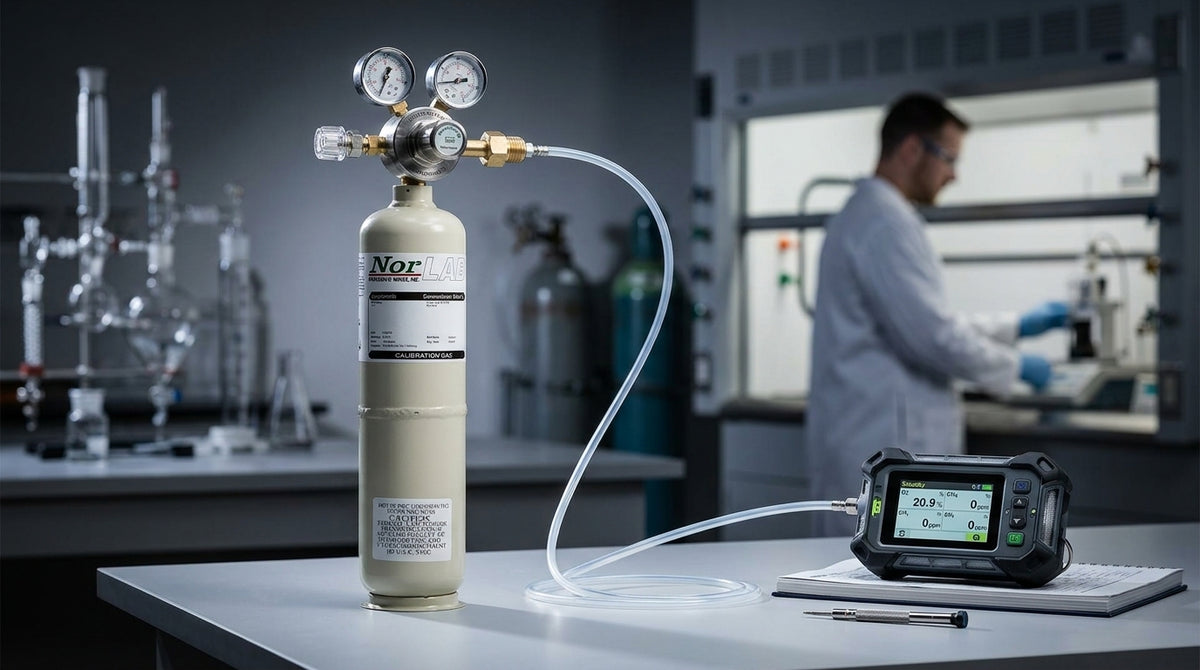
Calibration gas is the certified reference a gas detector is measured against — and choosing the wrong mixture, concentration, or cylinder quietly undermines every bump test and calibration you run. The right cylinder matches your detector's exact target gases and alarm setpoints, is certified traceable, and is sized to your usage so it doesn't expire on the shelf. This guide explains the types of calibration gas, how to read a mixture, and how to choose the right cylinder for your instruments.
What Is Calibration Gas?
Calibration gas is a precisely manufactured mixture of one or more gases at certified concentrations, used as the reference standard to bump test and calibrate gas detectors. When you calibrate, the detector is exposed to the gas and its reading is set to the cylinder's stated value — so the accuracy of the entire instrument depends on the accuracy of the gas. That's why calibration gas is certified and traceable to a national standard (NIST), with a certificate stating the exact concentration and tolerance.
Calibration gas and the act of calibration go hand in hand. For the difference between a quick bump test and a full calibration, and how often each is required, see Bump Test vs Calibration: The Gas Detector Maintenance Guide.
What Are the Types of Calibration Gas?
Calibration gas comes as single-gas or multi-gas mixtures, and the right one is dictated by the sensors in your detector. Most field gas detection uses multi-gas mixtures; single gases are used for specialty sensors or where one component needs separate verification.
- Multi-gas mixtures (the standard for confined-space detectors): a single cylinder containing the four classic gases — combustible (LEL/methane or pentane), oxygen, carbon monoxide, and hydrogen sulfide — lets one cylinder calibrate a standard four-gas monitor. Five-gas mixes add a component such as a VOC or a second toxic gas.
- Single-gas cylinders: one target gas in a balance gas, used for specialty sensors (for example chlorine, ammonia, sulfur dioxide) or to verify one sensor independently.
- Combustible/LEL gas: methane or pentane in air, used to calibrate the combustible sensor; the gas chosen should match what the detector's LEL sensor is configured for.
- Oxygen mixtures: a reduced-oxygen mix to verify the O2 sensor's low-alarm response, since ambient air alone only confirms the 20.9% point.
How Do You Read a Calibration Gas Mixture?
Read a mixture as a list of components, each with a concentration, in a balance gas. The concentration units and the balance gas both matter, because they have to match what your detector expects.
- Concentration units: combustible gas is given as %LEL or % by volume, oxygen as % volume, and toxic gases as parts per million (ppm). A typical four-gas mix might read 50% LEL methane, 18% O2, 100 ppm CO, 25 ppm H2S.
- Balance gas: the remainder of the cylinder — usually nitrogen or air. Use an air balance when the oxygen sensor must read correctly during calibration; a nitrogen balance is used for oxygen-deficiency verification.
- Certificate and traceability: the cylinder ships with a certificate stating the actual analyzed concentration and its NIST traceability — calibrate to the certified value, not the nominal label.
What Cylinder Size and Type Should You Choose?
Choose the cylinder by usage volume, the gases in the mix, and shelf life. Cylinder size sets how many calibrations you get per cylinder; cylinder material sets which gases stay stable inside it.
Cylinder Size
Calibration gas cylinders range from small portable sizes (around 17 litres) up to larger field cylinders (100+ litres). A larger cylinder costs less per calibration but, because gas carries an expiry, only makes sense if you'll use it before it expires. ERE's Norlab calibration gas is available from 17 to 221 litres so the cylinder can be sized to your fleet and frequency.
Cylinder Material
Non-reactive and inert gases (methane, nitrogen, argon, carbon monoxide blends) are stable in lightweight non-refillable steel cylinders. Reactive gases — hydrogen sulfide, chlorine, sulfur dioxide, low-concentration toxics — need aluminum or specially treated cylinders to keep the concentration stable over the cylinder's life. Matching the material to the mixture is what protects the certified concentration you're paying for.
Shelf Life and Logistics
Every cylinder has an expiry date after which the certified concentration is no longer guaranteed; reactive-gas mixes generally have shorter shelf lives than inert ones. In Canada, plan for the fact that calibration gas ships domestically only and order quantities you'll consume before expiry.
How Calibration Gas Works With Docking Stations
A docking station draws calibration gas from the cylinder through a demand-flow regulator and applies it automatically during bump tests and calibrations, recording each result. Matching the cylinder to the docking station means matching the regulator to the cylinder valve (for example CGA 600 or C-10) and ensuring the mixture covers every sensor in the detectors being serviced. The RKI SDM-03 docking station can be manifolded to share cylinders across multiple modules, reducing the number of regulators and cylinders a program needs.
What ERE Supplies
ERE Inc. supplies Norlab calibration gas as custom and standard NIST-traceable mixtures across the full range of single- and multi-gas blends, in cylinder sizes from 17 to 221 litres, shipped within Canada with bilingual technical support. Alongside the gas, ERE stocks demand-flow regulators and docking and calibration stations, and offers a calibration and repair service for teams that prefer to outsource. Send your detector models, target gases, and calibration frequency and our technical team will specify the right mixture, cylinder size, and regulator.
Get the right calibration gas from ERE.
ERE Inc. supplies NIST-traceable calibration gas in custom and standard mixtures, sized for your fleet and shipped within Canada — with bilingual technical support. Tell us your detector and target gases and we'll specify the cylinder.
→ Request a Quote | 1-888-287-EREC | Browse Calibration Gas | sales@ereinc.com
Frequently Asked Questions
What calibration gas do I need for a four-gas detector?
A four-gas mixture in a single cylinder: a combustible gas (LEL methane or pentane), oxygen, carbon monoxide, and hydrogen sulfide, at the concentrations your detector is set to verify. Confirm the exact gases and setpoints against your instrument, since LEL sensors can be configured for methane or pentane.
Why does calibration gas need to be NIST-traceable?
Because calibration sets the detector's reading to the cylinder's stated concentration, that concentration must be accurate and traceable to a recognized standard. NIST-traceable gas ships with a certificate stating the analyzed value and tolerance, so you calibrate to a known reference rather than an assumption.
Does calibration gas expire?
Yes. Every cylinder carries an expiry date after which the certified concentration is no longer guaranteed. Reactive-gas mixtures (such as hydrogen sulfide) generally expire sooner than inert ones, so size your cylinder to what you'll use before the expiry date.
Can I ship calibration gas anywhere?
Calibration gas is regulated for transport and, from ERE, ships within Canada only. Plan orders around domestic shipping and the cylinder's shelf life rather than stockpiling.
Related articles
- Bump Test vs Calibration: The Gas Detector Maintenance Guide
- Gas Detector Calibration Requirements in Canada
Lire en français : Gaz de calibration : types, mélanges et comment choisir