
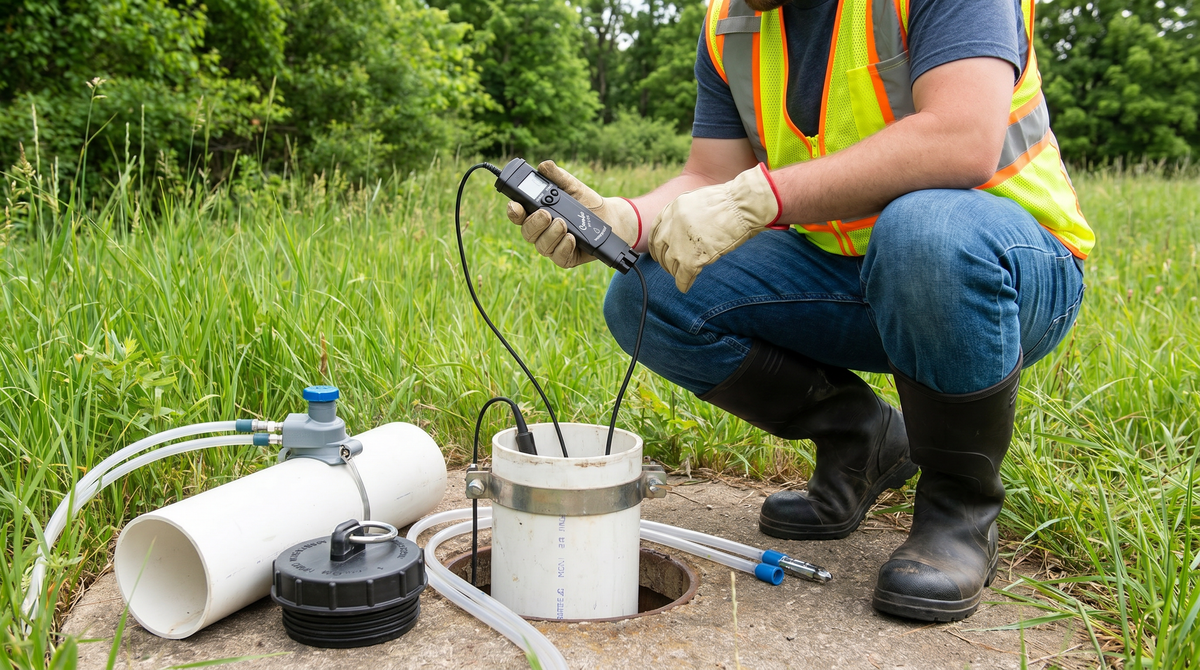
Choosing the right water quality meter for environmental field work comes down to three decisions: which parameters you need to measure, whether a handheld single-parameter unit or a multiparameter probe fits your project protocol, and how the instrument's durability and data logging capabilities match your reporting requirements. This guide covers selection criteria, Canadian regulatory context, and the Hanna Instruments models ERE Inc. carries.
Table of Contents
- What Parameters Does a Water Quality Meter Need to Measure?
- Does a Single-Parameter Meter Cover Phase II ESA Work?
- What Should You Look for When Selecting a Field Water Quality Meter?
- Which Hanna Instruments Models Does ERE Carry?
- How Do Canadian Regulatory Guidelines Affect Parameter Selection?
- What Are the Most Common Applications for Water Quality Meters?
- Frequently Asked Questions
What Parameters Does a Water Quality Meter Need to Measure?
The right parameter set depends on project scope: a Phase II ESA groundwater characterization requires at minimum five field parameters, while a routine surface water compliance check may need only two or three. The table below summarizes the most common parameters in Canadian environmental field work and what each reveals.
| Parameter | What It Indicates | Typical Range (groundwater) |
|---|---|---|
| pH | Hydrogen ion activity; drives metal solubility and microbial activity | 5.5–8.5 |
| Dissolved Oxygen (DO) | Aerobic vs. anaerobic conditions; redox status; aquatic health | 0–12 mg/L |
| Electrical Conductivity (EC) / TDS | Total dissolved solids; general water quality, salinity intrusion | 100–2,000 µS/cm |
| Temperature | Required for calibration of other parameters; thermal stratification | 4–25 °C |
| ORP (Oxidation-Reduction Potential) | Redox environment; presence of oxidizing or reducing contaminants | -200 to +600 mV |
| Turbidity (NTU) | Suspended solids; purging efficiency indicator in groundwater work | <5 NTU (stabilized well) |
Primary Field Parameters for Groundwater Work
pH, dissolved oxygen, conductivity, temperature, and ORP are the five parameters required to demonstrate groundwater stabilization before sample collection during a Phase II environmental site assessment. These five readings must trend to stable values — typically within 10% of three consecutive readings — before a purged-well sample is considered representative of ambient groundwater conditions. For a closer look at ORP instruments, see our ORP meter guide.
Secondary Parameters
Turbidity in NTU is a proxy for purging efficiency: a stable, low turbidity reading (usually below 5 NTU) confirms the well has been adequately developed before sampling. For surface water compliance under provincial permits or municipal stormwater programs, turbidity is frequently a reported discharge parameter. Ammonia-nitrogen matters at sites with agricultural or wastewater impact. ORP alone does not distinguish between nitrate and ammonia dominance; a selective ion electrode or colorimetric test clarifies nitrogen speciation when nitrogen is a site contaminant of concern.
Does a Single-Parameter Meter Cover Phase II ESA Work?
No — not practically. A Phase II ESA protocol under ASTM E1903 and provincial guidelines requires stabilization of pH, DO, conductivity, temperature, and ORP before collecting a groundwater sample. Swapping five separate single-parameter probes at a monitoring well wastes time, risks cross-contamination between probes, and creates gaps in the stabilization trend record. A multiparameter meter that reads all five simultaneously is the field standard for ESA groundwater work in Canada.
Single-Parameter Meters: When They Work
- Routine pH monitoring at a remediation site with a stable, well-characterized baseline
- Field screening for TDS or conductivity in drinking water distribution checks
- Budget-constrained projects where only one parameter drives the risk decision
- Backup measurement when the primary multiparameter probe is under calibration
Multiparameter Meters: When They're Worth the Investment
- Phase II ESA groundwater sampling (five parameters measured simultaneously)
- Long-term monitoring wells requiring timestamped, logged data exports
- Surface water transect surveys covering multiple sampling stations per day
- Permit-required reporting with QA/QC chain-of-custody documentation
- Regulatory submissions where parameter stabilization trending must be demonstrated
See our water quality instrumentation collection for current inventory of portable multiparameter and single-parameter units from Hanna Instruments.
What Should You Look for When Selecting a Field Water Quality Meter?
IP rating, cable length, calibration frequency, and data export format are the four variables that separate a meter that performs in Canadian field conditions from one that fails at its first muddy monitoring well.
Does IP Rating Matter for Canadian Field Conditions?
Yes. IP67 is the minimum acceptable rating for Canadian field use — it means the meter survives full immersion to 1 m depth for 30 minutes. IP68 is preferred for probe heads that will be lowered into monitoring wells or left in surface water for extended periods. Canadian field seasons run April through November with significant precipitation; a meter rated below IP67 is a liability in shoulder-season conditions where equipment regularly encounters rain, mud, and accidental submersion.
What Cable Length Do You Need for Monitoring Wells?
Standard shallow environmental monitoring wells are 2–15 m deep. A 10 m cable covers most urban and shallow bedrock wells. For deeper aquifer monitoring — common in prairie and Canadian Shield geology — 30 m or 50 m probe extension cables are available on professional instrument systems. Confirm the cable length against the site depth-to-water table before selecting an instrument. Bringing a 10 m cable to a 20 m deep well means a wasted site visit.
Data Logging and Reporting Requirements
Most Canadian Phase II ESA report templates require field measurement tables with parameter, time, reading, calibration buffer lot number, and calibration date. A meter with internal memory that exports to CSV eliminates transcription errors and speeds QA/QC review. Minimum practical specification: 200-event internal memory with USB data transfer. Some Hanna Instruments models include Bluetooth connectivity and companion apps for real-time data entry in the field.
Calibration Requirements and Operating Cost
pH electrodes require two-point calibration against NIST-traceable buffer solutions (pH 4.01 and pH 7.01, or pH 7.01 and pH 10.01) before each sampling event. Dissolved oxygen sensors require one-point calibration against water-saturated air or a zero-DO solution, particularly if ambient temperature has changed more than 5°C since the last calibration. Conductivity cells use a standard KCl solution and hold calibration longer than pH or DO sensors. Factor calibration reagent cost into the total cost of ownership when comparing instruments — some Hanna Instruments kits include calibration solutions, which simplifies field kit preparation and project budgeting. Our pH meter buyer's guide covers electrode choice and calibration in detail.
Which Hanna Instruments Models Does ERE Carry?
ERE Inc. carries Hanna Instruments water quality meters for the Canadian market. Hanna Instruments is an Italian analytical instrumentation manufacturer with 40+ years in the field; their products are distributed globally and are accepted by regulatory agencies for environmental field measurement. Key units available through ERE:
- Hanna Combo pH/EC/Temp/TDS Meter (HI98129 series) — Four-in-one handheld unit for field screening. Measures pH, electrical conductivity, TDS, and temperature in a single waterproof body. Well-suited for routine screening and water quality spot checks. Note: this unit does not measure dissolved oxygen — a separate DO probe is required for Phase II ESA groundwater stabilization confirmation.
- Hanna HA-991001 / HA-991002 / HA-991003 Series — Portable multiparameter meters for pH, conductivity, and dissolved oxygen in various configurations. Designed for industrial and environmental field use with IP67-rated housings.
- Hanna pHep4 and pHep5 — Compact, low-cost waterproof pH testers suitable for rapid field screening or as a backup pH check against a primary multiparameter probe. Single-parameter only.
- Hanna ORP Tester — Dedicated oxidation-reduction potential meter. Pairs with a pH meter for complete redox characterization in groundwater sampling where both parameters are logged separately.
- Secchi Disk — Classic turbidity measurement tool for open-water depth-of-visibility assessments. Required for some lake and reservoir monitoring protocols under provincial environmental assessment programs.
Contact ERE for current technical specifications, availability, and calibration solution kits. Prices are not published online — request a quote for project-specific pricing and availability.
How Do Canadian Regulatory Guidelines Affect Water Quality Parameter Selection?
Field measurements must be defensible against published Canadian guidelines. The two primary references for environmental site investigators are the CCME water quality guidelines and Health Canada's drinking water quality guidelines.
The Canadian Council of Ministers of the Environment (CCME) Canadian Water Quality Guidelines for the Protection of Aquatic Life set parameter-specific thresholds for pH, temperature, dissolved oxygen, and specific contaminants in receiving waters. Any site discharging to surface water or with an identified aquatic receptor requires measurements traceable to CCME PWQG threshold values. pH (6.5–9.0) and DO (>6.5 mg/L for cold-water fish habitat) are the most commonly encountered CCME guideline values in site characterization work.
For sites near drinking water intakes or where groundwater is a drinking water source, Health Canada's Guidelines for Canadian Drinking Water Quality define acceptable ranges for pH (6.5–8.5), turbidity (<1 NTU after treatment), and specific chemical parameters. Your meter's measurement range and certified accuracy must bracket these limits to generate legally defensible data.
Provincial frameworks layer on top of federal guidelines. Quebec's Politique de protection des sols et de rehabilitation des terrains contamines (PPSRTC) and Ontario's soil and groundwater standards under O. Reg. 153/04 both incorporate CCME benchmarks while adding province-specific site condition criteria. Consult your provincial regulator for the applicable standard tier before designing a monitoring parameter set.
What Are the Most Common Applications for Water Quality Meters in Environmental Consulting?
Field water quality meters serve four core application areas in Canadian environmental work. Each application drives different instrument selection decisions.
Phase II Environmental Site Assessment
Groundwater sampling during a Phase II ESA requires field parameters to confirm well purging and groundwater stabilization before sample collection. ASTM E1903 and CSA-standard provincial protocols typically require pH, DO, conductivity, temperature, and ORP, with readings logged at minimum every 3 minutes during purging until three consecutive readings are within 10% of each other. A multiparameter meter with internal data logging satisfies this requirement without manual transcription — the log becomes part of the sampling chain-of-custody record.
Long-Term Groundwater Monitoring
Remediation monitoring networks require periodic water quality checks at each monitoring well over years or decades. A rugged handheld multiparameter probe with a long probe cable (10–30 m) and exportable data log is the standard tool for quarterly or semi-annual monitoring visits. For high-frequency, unattended monitoring — for example, plume migration tracking during active remediation — deployed submersible sondes log data at programmed intervals and can upload via telemetry to cloud platforms. ERE's instrument rental program provides access to specialized monitoring equipment for short-duration deployments without capital purchase.
Surface Water and Stormwater Compliance
Industrial facilities with stormwater discharge permits (under provincial environmental compliance approvals) must measure effluent quality before discharge. Parameters typically include pH, conductivity, turbidity, and temperature. A portable IP67-rated meter with onboard logging covers most permit monitoring requirements at a fraction of the cost of a deployed continuous monitor. Some provincial permits require turbidity to be below 25 NTU for stormwater discharge — an NTU-capable multiparameter meter eliminates the need for a separate turbidimeter in the field kit. If a permit or process reads TDS rather than conductivity, see our TDS meter buyer's guide for the conversion factor and range.
Drinking Water Source Monitoring and Private Wells
Municipal water operators and public health inspectors use portable meters for distribution system checks, private well testing programs, and drinking water source monitoring under Source Protection Plans (Ontario) or equivalent provincial frameworks. Field meters provide rapid screening and operational decision support; note that Canadian provinces require laboratory analysis by an accredited facility for regulatory compliance reporting — field meter data supports operational decisions but does not replace accredited lab results for permit submissions. For a complete overview of environmental sampling equipment requirements across a site investigation, see our full guide.
Need a water quality meter for your next project?
ERE Inc. has supplied environmental consultants across Canada with field instrumentation for 30+ years. Our technical team can match a Hanna Instruments meter to your project protocol — including calibration solution kits, probe cables, and rental options for short-duration projects.
→ Request a Quote | 1-888-287-EREC | Browse Water Quality Instruments | sales@ereinc.com
Frequently Asked Questions
What is the difference between a water quality meter and a water quality sonde?
A handheld water quality meter is a portable instrument with a connected electrode or probe, read manually during a sampling event. A sonde is a submersible multi-sensor unit designed for continuous, unattended deployment in a monitoring well or stream — it logs data internally or transmits via telemetry. Handheld meters are lower-cost and sufficient for periodic sampling visits; sondes are used when continuous records are required between site visits or for real-time compliance monitoring.
How often do water quality meters need to be calibrated?
pH electrodes should be two-point calibrated before each sampling event using NIST-traceable buffer solutions. Dissolved oxygen sensors require calibration before each use, particularly if ambient temperature has changed significantly since the last calibration. Conductivity cells are more stable and can hold calibration for multiple days if the cell constant is verified with a standard solution. ASTM E1903 requires calibration records — including buffer lot numbers and calibration date — as part of the groundwater sampling QA/QC documentation.
Can I rent a water quality meter from ERE instead of purchasing?
ERE Inc. maintains an environmental instrument rental program covering gas detectors, air sampling pumps, and other field instruments. Contact our technical team to confirm current availability of water quality meters in the rental fleet. For short-duration Phase II ESA projects with limited repeat sampling, renting a multiparameter meter is often more economical than purchasing.
What does the CCME pH guideline mean for my field measurements?
The CCME Canadian Water Quality Guideline for pH in freshwater (6.5–9.0 for the protection of aquatic life) defines the threshold against which your field pH data will be evaluated where there is an aquatic receptor. Your meter's pH accuracy must be sufficient to distinguish a reading at the guideline boundary. Most professional-grade Hanna Instruments meters carry pH accuracy of plus or minus 0.1 pH units or better, which is adequate for CCME-referenced site characterization work.
What is the Secchi disk used for in water quality monitoring?
A Secchi disk is a low-cost turbidity assessment tool for open-water lake and reservoir monitoring. It is lowered into the water column until it disappears from sight — the depth at which it is no longer visible (Secchi depth) is a proxy for water clarity and light penetration. It is not a substitute for NTU-based turbidity measurement in permit compliance monitoring, but it is an accepted method in provincial lake health assessment protocols and long-term ecological trend monitoring programs where historical Secchi depth records provide baseline context.
Related articles
- Phase II ESA Equipment Checklist for Canadian Consultants
- Environmental Sampling Equipment Guide for Canada
- Groundwater Bailers: Types, Materials and Selection Guide
- Air Sampling Pumps: Buyer's Guide for Canada
Lire en francais : Appareils de mesure de la qualité de l'eau : guide d'achat pour les consultants canadiens