
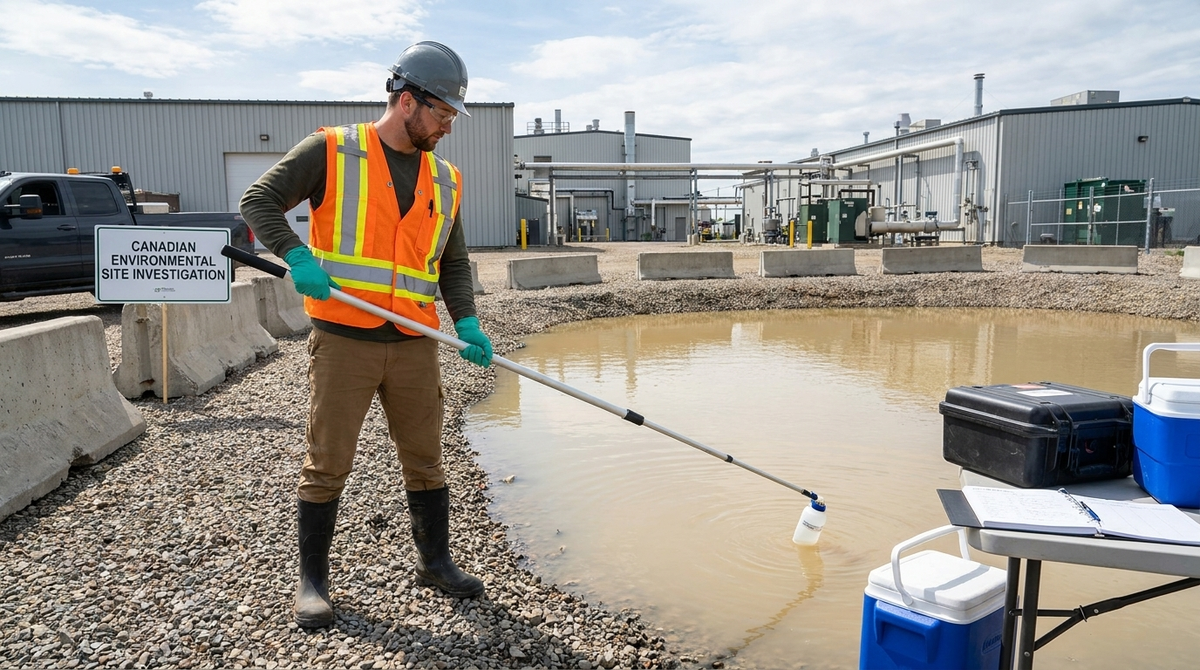
The right grab sampler for your application depends on two things: where the sample sits in the water column (surface, mid-depth, or bottom sediment) and what you are sampling (open water, sludge, or consolidated sediment). This guide covers every major grab sampler type, selection criteria, and Canadian regulatory context so you can pick the right equipment before you arrive on site.
What Is a Grab Sampler?
A grab sampler captures a discrete water, sludge, or sediment sample from a single point in time and space. Unlike composite samplers (which mix sub-samples over time), a grab provides a snapshot of conditions at the exact moment of collection — which is what ASTM D5358 (Standard Practice for Sampling with a Dipper or Pond Sampler) and most provincial lab submission protocols require for surface water and waste characterization.
Environmental consultants use grab samplers for:
- Phase II ESA surface water stations (ponds, ditches, stormwater basins)
- Sludge characterization in holding lagoons, oil-water separator tanks, and industrial sumps
- Sediment sampling in rivers, lakes, and contaminated site ponds
- Industrial process water spot-checks and effluent compliance monitoring
Which Grab Sampler Type Do You Need?
The four main grab sampler types each fill a specific niche. Using the wrong type leads to sample loss, contamination, or protocol non-compliance.
Surface and Depth Water Grab Samplers (Extension-Pole Type)
Extension-pole samplers use a telescopic or fixed-length pole to lower an open collection vessel to the target depth before triggering the seal. The TeleScoop Water Sampler is the standard tool for this application — its telescopic sections extend from approximately 1 m to 4.5 m, letting a single operator reach mid-channel or mid-pond depths from shore without wading or using a boat.
Key specifications for pole-type grab samplers:
- Depth range: 0 to ~4.5 m (TeleScoop); fixed-length poles reach 1.5–3 m
- Sample volume: typically 500 mL – 1 L; match your lab submission requirement
- Materials: HDPE or borosilicate glass vessel, stainless or aluminium pole — select for the analyte class (HDPE for metals, glass for VOCs and organics per US EPA Field Sampling Guidance)
- Seal mechanism: gravity-close (open on lower, seal on retrieval) or push-down trigger
Browse our full range of water and liquid sampling equipment, including the TeleScoop and compatible vessels.
Sludge and Slurry Samplers
Standard open-tube grab samplers lose their sample when retracted through floating oil or dense sludge — the material flows back out before you can seal the tube. Sludge samplers solve this with a spring-loaded or weighted trap valve at the base that closes on retrieval.
ERE stocks the full Nasco Sludge Judge line — the field-standard for oil-water separator maintenance, lagoon characterization, and industrial sump sampling across Canada. The Sludge Judge uses a transparent polycarbonate tube with a bottom-mounted spring-loaded valve: insert into the sludge layer, the valve opens on contact with the substrate, then closes to retain the sample on retrieval. The AMS Sludge Sampler and Multi-Stage Sludge Sampler are alternatives for discrete depth-profiling within a sludge column.
When to use a sludge sampler vs a bailer:
- Use a sludge sampler when collecting viscous or high-solids material (lagoon sludge, tank bottoms, separator solids, bio-solids)
- Use a bailer when sampling groundwater from a monitoring well — bailers are purpose-built for the low-turbulence retrieval required in well purging protocols
- Never use a bailer for sludge — the check-valve ball will not seal against viscous material and the sample will be lost on retrieval
See our groundwater bailers selection guide if your application is well sampling rather than surface sludge.
Sediment and Bottom Grab Samplers
Sediment samplers physically penetrate and retain bottom material: consolidated bed sediments, fine silts, contaminated riverbeds, and pond bottoms. Two main types for open-water deployment:
Ekman Grab (box grab): Spring-loaded jaws close on impact with the bottom, capturing an undisturbed box of sediment. Best for loose, fine-grained material in still or slow-moving water. Standard for CCME Canadian Environmental Quality Guidelines sediment assessment protocols. ERE stocks the Sampling Systems Snapper, a pole-mounted spring-loaded grab sampler built on this same jaw-closure principle — 250 mL capacity on a telescopic rod extending to 4.5 m, sized for a single operator working from shore.
Ponar Grab: Weighted design for heavier material and faster-moving water. Better penetration in coarser sediment and gravel. Less effective for silts (can flush fine material on retrieval).
Core tube samplers: Push a clear tube into the sediment to capture a vertical profile — useful for assessing contamination depth and stratigraphy. Used by environmental consultants for Phase II ESA sediment stations. See our soil sampling equipment guide for related coring and augering equipment.
Browse our sludge and sediment sampling collection for the full range of ERE-stocked equipment.
Sand and Sediment Probes
For granular media — sand, fine gravel, or mixed sediment layers at accessible depths — a dedicated probe provides faster sample collection with less disturbance than an open-tube push sampler. The AMS Sand Sludge Sediment Probe and the Multi-Stage Sludge/Sediment Sampler Kit are purpose-built for this application, allowing multiple discrete samples from the same location at different depth intervals.
Does Material Compatibility Matter for Grab Samplers?
Yes — especially for trace metals and organics analysis. The wrong material can contaminate your sample before the lab opens the bottle.
| Contaminant Class | Vessel Material | Pole/Body Material | Avoid |
|---|---|---|---|
| Trace metals (lead, chromium, arsenic) | HDPE or polypropylene | Stainless, aluminium | Galvanized, bare steel |
| Volatile organics (VOCs, BTEX, chlorinated solvents) | Borosilicate glass | Stainless | HDPE, PE, PVC (sorb organics) |
| Nutrients (nitrate, phosphate) | HDPE or glass | Any | None specific |
| PCBs / PAHs | Glass or PTFE | Stainless | PE, PVC |
| Sludge / general solids characterization | Polypropylene or HDPE | Any | None specific |
ASTM D5358 specifies that sample containers should be pre-cleaned and dedicated to the analyte class. Field rinsing with sample water (3 × rinse) is required before collection for most parameters.
How Do You Decontaminate a Grab Sampler Between Stations?
Decontamination between sampling stations prevents cross-contamination — a critical requirement for Phase II ESA chain-of-custody integrity and most provincial lab protocols.
Standard grab sampler decontamination sequence (CCME / provincial protocol):
- Rinse with potable water to remove gross solids
- Wash with phosphate-free soap (Liqui-Nox or equivalent) and scrub brush
- Rinse twice with deionized or distilled water
- Triple-rinse with sample water at the new station before collecting
- For organics sampling: add an isopropanol rinse between the soap and DI water steps
Maintain a decontamination log and use dedicated decon tubs. Disposable polyethylene liners simplify cleanup in high-solids sludge sampling work.
Are Grab Samplers Compliant With Canadian Regulatory Programs?
Grab sampling is the most common method for surface water, effluent, and sludge characterization under Canadian environmental regulatory frameworks:
- CCME Canadian Environmental Quality Guidelines: specify grab sampling as acceptable for surface water and sediment quality assessment at contaminated sites
- Fisheries Act (DFO): effluent characterization uses grab samples for pH, TSS, total ammonia nitrogen, and acute toxicity endpoints
- Ontario O. Reg. 153/04: accepts grab sampling for Phase II ESA surface water stations
- ASTM D5358 / D5094: standard practice for dipper-type and sub-surface grab samplers — widely cited in provincial lab submission protocols across Canada
For a broader Phase II ESA equipment checklist, see our Phase II ESA Equipment Checklist for Canadian Consultants.
Need help selecting the right grab sampler?
ERE Inc. has been Canada's environmental equipment specialist for 30+ years. Our team can help you match sampler type, material, and volume to your specific protocol requirements and lab submission needs.
→ Request a Quote | 1-888-287-EREC | Browse Sludge & Sediment Samplers | sales@ereinc.com
Frequently Asked Questions
What is the difference between a grab sampler and a composite sampler?
A grab sampler captures a single discrete sample at one point in time — a snapshot of conditions at that moment. A composite sampler mixes sub-samples collected over time to average variable concentrations. Most regulatory programs (Phase II ESA, effluent monitoring) specify which type is required for each parameter. Grab sampling is preferred for pH, dissolved oxygen, volatile organics, and anything where concentration changes rapidly over time.
Can I use a bailer as a grab sampler for surface water?
No. Bailers are designed for clean groundwater from monitoring wells, where they are lowered slowly and retrieved with a check valve that retains the sample. In open surface water or sludge applications, the check valve does not seal against particulates or viscous material, and standard bailer retrieval speed mixes the water column. Use a dedicated surface grab sampler (extension pole type) or sludge sampler for non-well applications.
How deep can a telescopic grab sampler reach?
The TeleScoop Water Sampler extends from approximately 1 m to 4.5 m, which covers the majority of surface water grab sampling applications — shallow ponds, ditches, stormwater basins, and small lake margins. For deeper open-water stations, use a Kemmerer or Van Dorn bottle with a messenger-triggered seal, which can be lowered on a graduated line to precise depths in lakes and large water bodies.
What materials are grab samplers made from?
Common materials include HDPE (metals, nutrients), borosilicate glass (organics, VOCs), polypropylene (general sludge), PTFE/Teflon (trace organics, PCBs), and stainless steel (corrosive or high-temperature applications). Always match the sampler material to the analyte class — the wrong material will contaminate your sample before analysis.
Are sludge samplers and sediment samplers the same thing?
No. A sludge sampler (e.g., Sludge Judge) uses a spring-loaded piston to draw viscous liquid sludge from tank bottoms, oil-water separators, and lagoons — it retains slurries. A sediment sampler (Ekman grab, Ponar grab, core tube) physically penetrates and retains consolidated bottom material from riverbeds, lake beds, and contaminated sediment layers. Each type is purpose-built for its substrate.
Related articles
- Groundwater Bailers: Types, Materials & Selection Guide
- Environmental Sampling Equipment Guide for Canada
- Soil Sampling Equipment: Augers, Core Samplers & Split Spoons
- Phase II ESA Equipment Checklist for Canadian Consultants
Lire en français : Échantillonneurs grab eau et sédiments : guide de sélection pour le Canada