
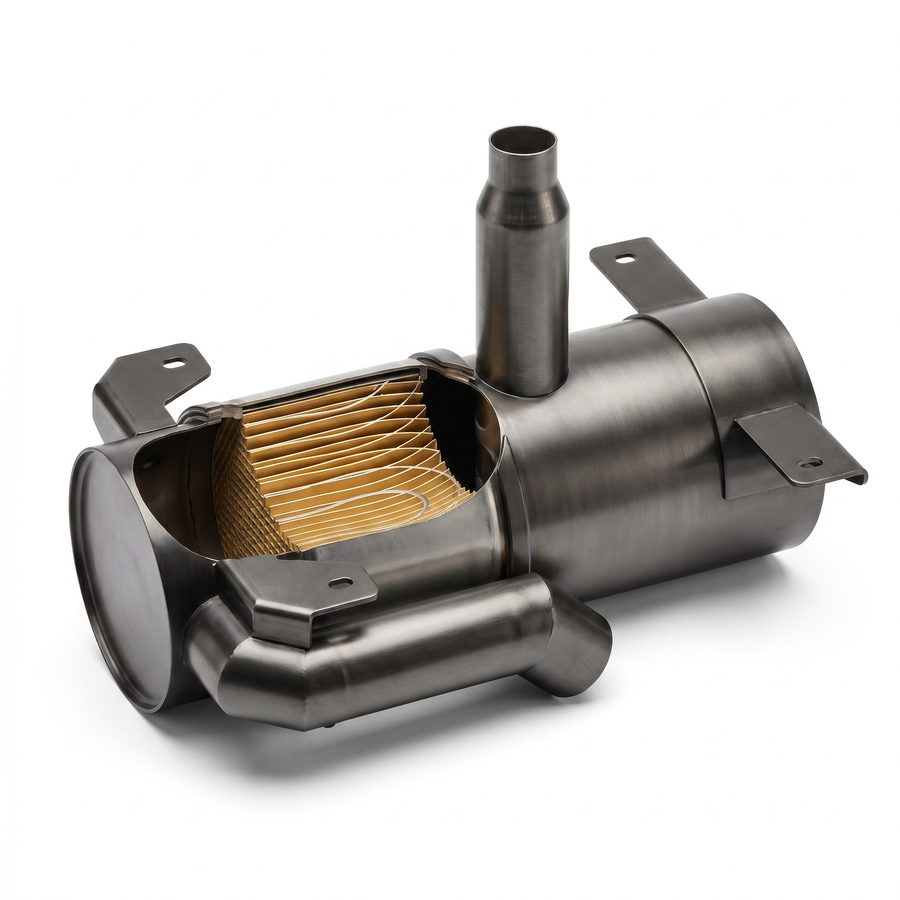
How the Diesel Oxidation Catalyst Works
A precious-metal diesel oxidation catalyst is bonded to a monolithic, flow-through catalyst core. As exhaust passes through the core, the catalyst oxidizes the soluble organic fraction (SOF) of diesel particulate matter and other gaseous components. The core is made of either corrugated, high-temperature-resistant stainless steel foil or thin-wall cellular ceramics, and is packaged into a rugged stainless steel container.
Conversion of the soluble organic fraction may exceed 80%, and total diesel particulate matter (DPM) conversions between 20% and 50% are typically observed. Heavy-duty catalysts incorporate sulfate suppressants to maximize particulate-matter performance. Low-sulfur fuel is recommended for high DPM conversions.
Key Specifications
| Catalyst Type | Precious-metal diesel oxidation catalyst, monolithic flow-through core |
| Core Material | Corrugated high-temperature stainless steel foil or thin-wall cellular ceramic |
| Housing | Rugged stainless steel container |
| SOF Conversion | May exceed 80% |
| Total DPM Conversion | Typically 20–50% |
| Fuel Requirement | Low-sulfur fuel recommended for high DPM conversions |
Applications
- Heavy-duty diesel particulate matter conversion
- Diesel exhaust soluble organic fraction (SOF) control
- Low-sulfur diesel emissions reduction
Related equipment we stock
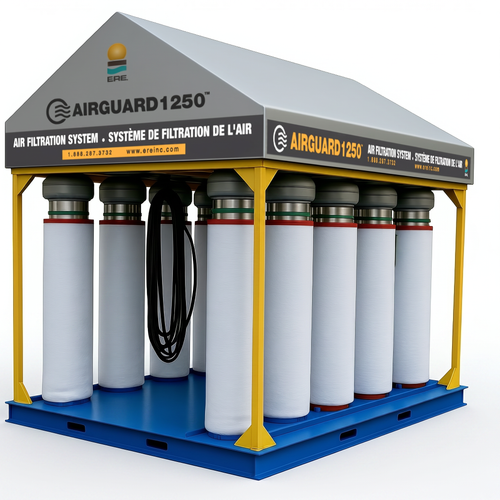
AirGuard 1250
Capacity: up to 12,500 CFM | Treats: VOCs & odors | Application: ambient air treatment
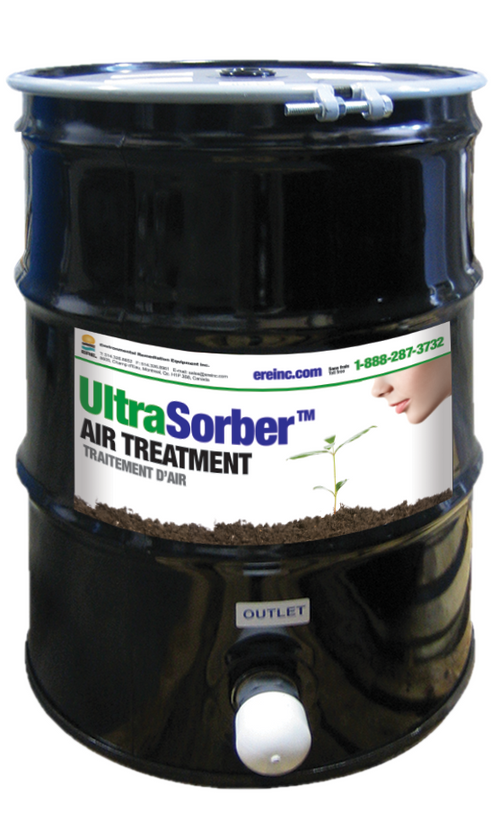
UltraSorber-ALCO™ Alcohol Air Treatment Units
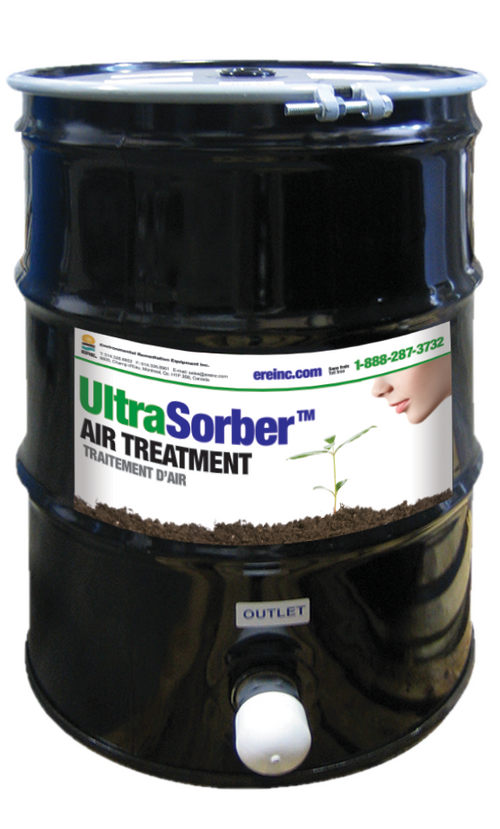
UltraSorber-FORMA™, Formaldehyde Air Treatment Units
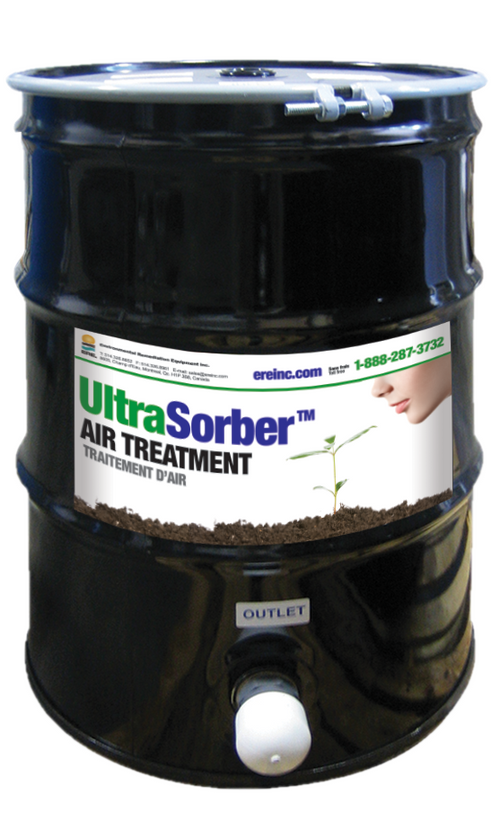
UltraSorber-MERC™ Mercury Air Treatment Units
General Specifications: | Media Weight: 325 lbs | Mesh Size: 4 x 10 | Max. Vapor Flow: 375 cfm